

The isness tarot
A set of tarot cards out of the ordinary
83-card deck & guidebook
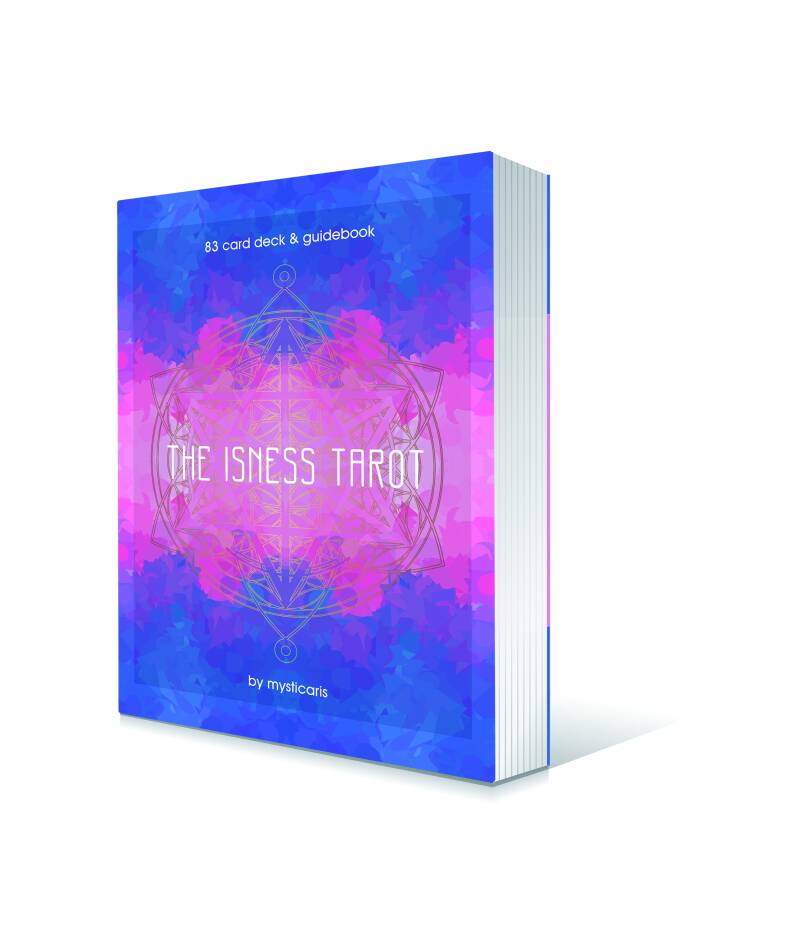
The Genesis of The Isness Tarot
Tarot Story
Traditionally, tarot decks are constructed with intention — each card carefully designed to represent a predefined archetype. The Isness Tarot emerges through an entirely different process: not as a system imposed, but as a story revealed.
Its imagery was not planned, but received, arising from an intuitive state in which form, color, and symbol unfolded beyond conscious control. What later became a tarot deck began not as tarot, but as a process of inner transformation.
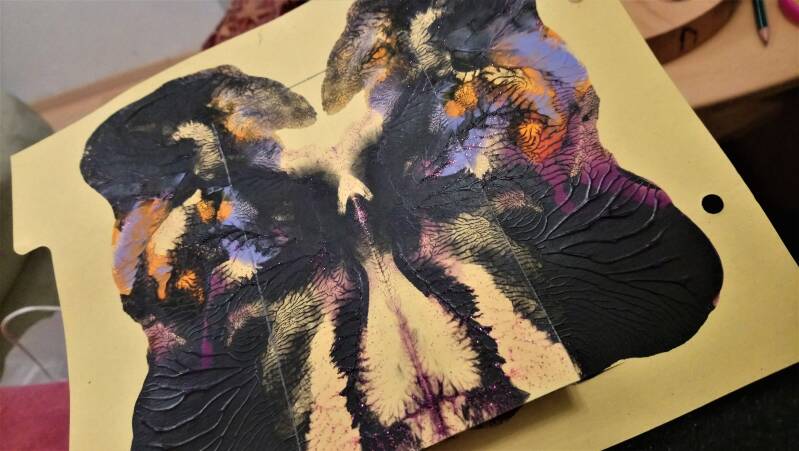
Birthing of the card 'Death'
The Birth of Creation
Between the ages of 15 and 25, the artist worked as a receptionist in a retirement home — a space defined by repetition, quiet presence, and the subtle threshold between life and death. There, she encountered small administrative cards bearing the names of residents, routinely discarded after their passing. With permission, she began collecting them — drawn to their fragility, and to the sense that they carried something beyond their function.
At the same time, she was engaged in a deep process of personal healing, working through layers of childhood trauma and inherited patterns. It was within this inner landscape that she encountered klecksography — a technique of folded ink images, reminiscent of Rorschach blots.
What began as spontaneous experimentation soon transformed into a ritual process. The act of folding ink became a space of surrender — a place where images emerged without direction, forming a visual language that seemed to precede conscious meaning.
Unknowingly, she was generating archetypal forms.
For nearly two years, these images remained untouched, stored away without interpretation. Only later, through an intuitive recognition, did their nature reveal itself: they were not isolated works, but fragments of a larger system — the foundation of a tarot deck.
The Ordering of the Story
The sequence of the cards did not arise through study, but through recognition. During a quiet moment at the same reception desk, the images began to arrange themselves intuitively into a coherent structure. Each card found its place not through logic, but through resonance — as if the system had always existed, waiting to be seen. A year later, the deck took on its final order. In the following years it took another material form: a black and gold edition, embodying the depth, memory, and symbolic weight of its origin.

The Emperor card serves as an example of the metamorphosis each card underwent.
Beyond Structure — The Additional Arcana
While The Isness Tarot largely follows the architecture of traditional tarot, its evolution called for expansion. Five additional cards emerged organically — not as deviations, but as necessary extensions of the system. At the heart of these is a triadic formation embodying The Goddess, expressing the sacred feminine principle through three interconnected aspects:
- Maiden
- Mother
- Crone
Aligned with the lunar phases — waxing, full, and waning — these cards carry the qualities of intuition, receptivity, and cyclical transformation. In their polarity stands The Horned God, representing the complementary force — instinct, vitality, and grounded presence of the sacred masculine.
At the center of the system is The Isness — the name-bearing card and conceptual core of the deck. It does not represent an archetype in the traditional sense, but rather a state: being itself, prior to division, holding the totality from which all other forms emerge.


The Maiden symbolizes the dawn of new beginnings, embodying purity, youthful vitality, creative potential, and a sense of innocence.
The Mother archetype embodies a sense of fullness and abundance, symbolizing fertility, nurturing responsibility, patient endurance, and profound self-love and acceptance.
The Crone archetype, depicted alongside the waning moon, epitomizes the culmination of fulfillment and the attainment of wisdom born from experience.


The Horned God embodies the masculine aspect within the Tarot deck. In certain traditions, he mirrors the Triple Goddess and thus manifests in three distinct facets: the Warrior, the Father, and the Sage. This card is intertwined with themes of wilderness, nature, primal instincts, sexuality, and the eternal cycle of life.
Isness embodies the essence of What Is, encapsulating the fundamental nature of existence itself.
The Isness card stands as the ultimate addition to the deck, bearing the very name of the tarot set.
Create Your Own Website With Webador